
News detail
AI Glasses Sector Accelerates Breakthrough, Danhai Technology × Taixin Semiconductor Collaborate to Build Next-Gen AI Smart Glasses
Summer has just arrived in 2026, and the battle in the AI glasses market has already begun. Meta, Huawei, RayNeo, Rokid, Alibaba Tongyi Qianwen—dozens of new products have been un…

Behind this lively product war, there is a question worth asking:Whose chip is installed inside these glasses?
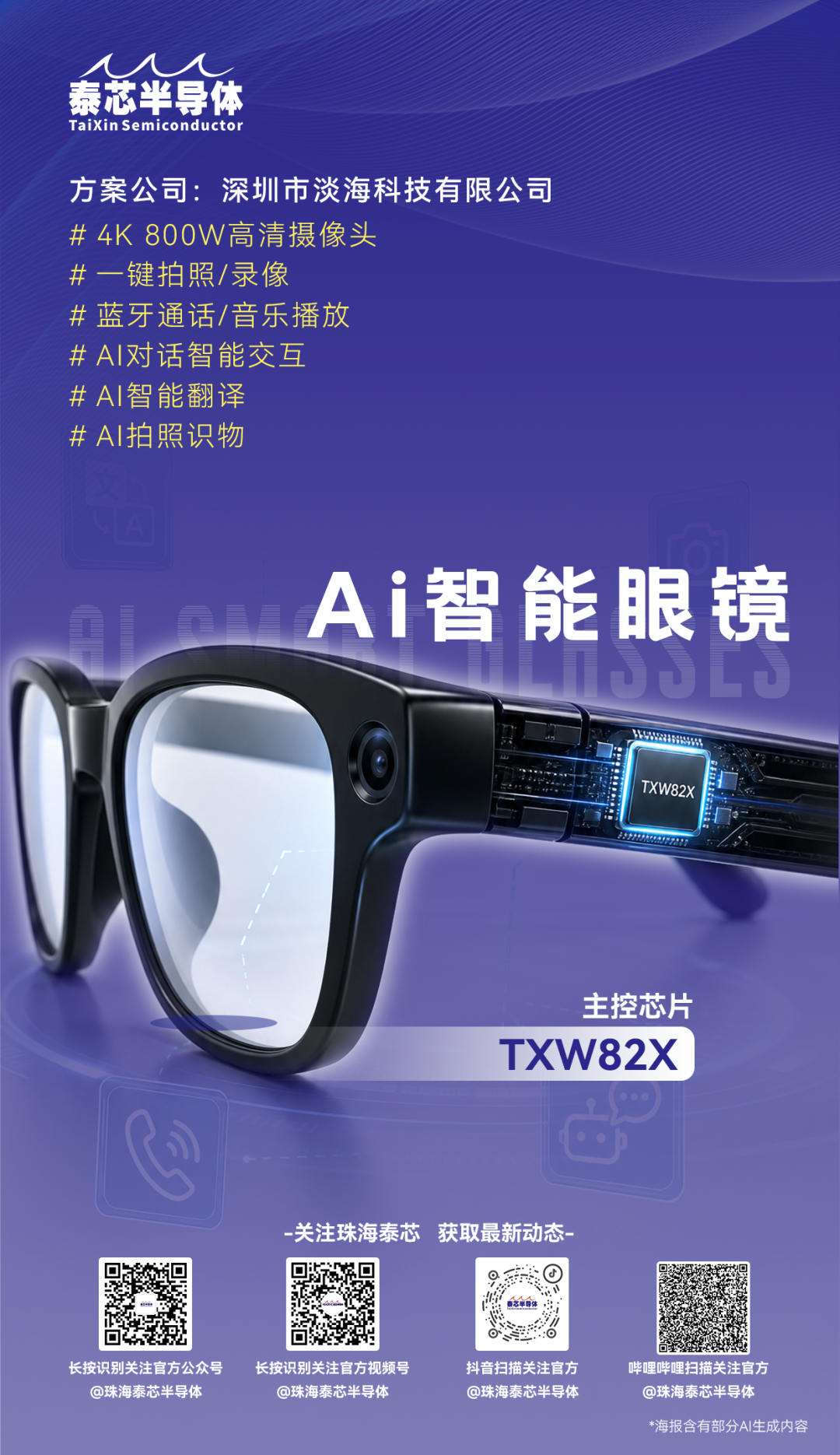
Today, the main control chip of the AI smart glasses officially launched by Shenzhen Danhai Technology Co., Ltd. is precisely Zhuhai Taixin's,TXW82X, undertaking two core tasks: connectivity and image processing. Our chips are increasingly being selected as the main controller for edge-side AI products.
Inside the 39g glasses,
there isn't room for three chips.
This newly launched AI glasses from Danhai Technology packs functions such as video recording, phone calls, AI interaction, AI object recognition, and AI translation into a 39g frame, offering all-day battery life, seamless connectivity, and stable video. However, in traditional solutions, Wi-Fi, ISP, and main control chips operate independently, resulting in high power consumption, significant heat generation, and making lightweight design and long battery life challenging.
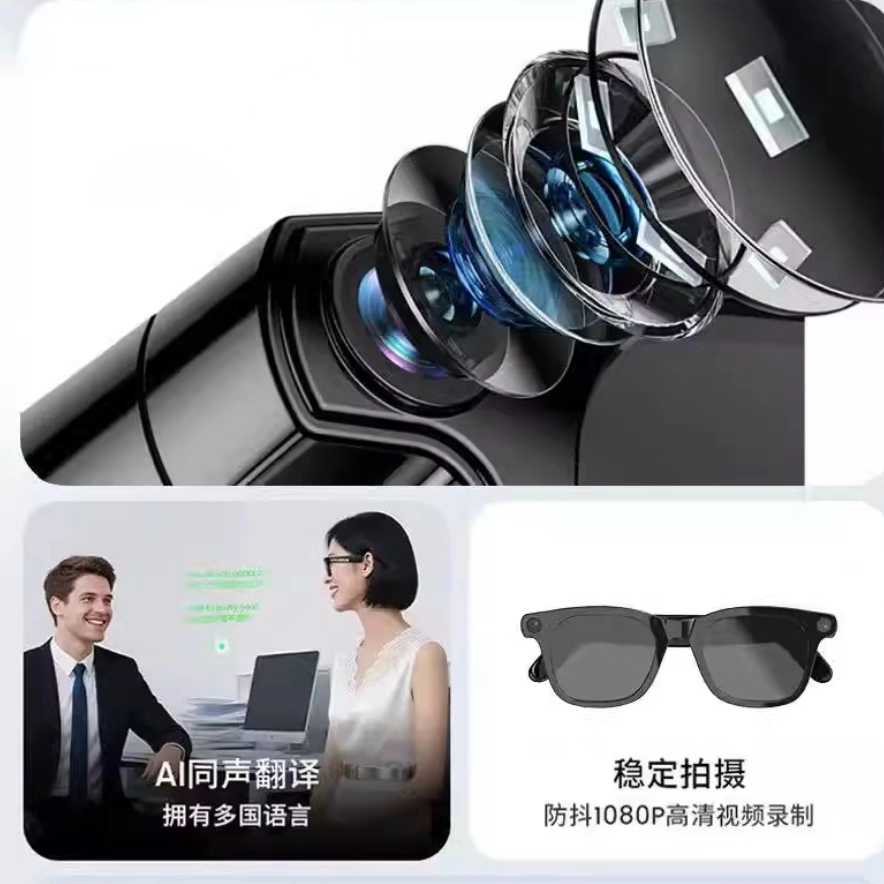

Image source: Danhai Technology
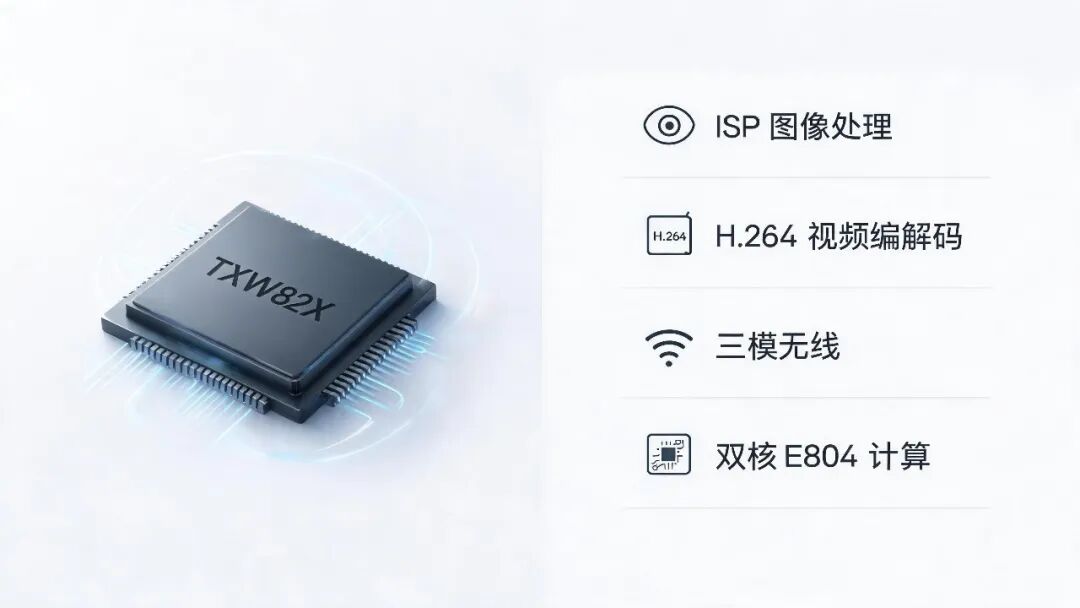
The solution provided by the Taixin TXW82X series is extreme integration: integrating tri-mode communication (Wi-Fi/BLE/NearLink), professional ISP image signal processing, audio processing, and video encoding/decoding into a single SoC. Featuring a dual-core XuanTie E804 architecture (240MHz clock speed), supporting dual-eye 1080P input and H.264 hardware encoding/decoding—the work previously done by three chips is now fully handled by one.
Lower power consumption, smaller size, and optimized costs mean faster time-to-market and greater profit margins for terminal manufacturers; for consumers, it translates to a lighter, smoother, and more durable AI glasses experience.
One Chip Unlocks Six Powerful AI Glasses Performance Features
Danhai Technology's AI smart glasses fully demonstrate the capabilities of the TXW82X series chip:
■ 4K 8MP HD Shooting + 1080P Anti-Shake Recording
Built-in professional ISP completes image stabilization and enhancement, ensuring clear masterpieces with every snap;
■ Bluetooth Calling + Dual-Mic Noise Cancellation
The chip integrates an audio processing module, ensuring crystal-clear calls outdoors as if face-to-face;
■ AI Voice Assistant + Real-time Translation
Powered by edge-side AI inference capabilities, the Tongyi Qianwen advanced model responds instantly, enabling instant Chinese-English translation and real-time switching among multiple languages;
■ AI Object Recognition
ISP and AI collaborative processing complete recognition on the edge side with low power consumption and no latency;
■ 290mAh Battery All-Day Battery Life
High integration brings extreme power consumption control, over 20 hours of audio playback, saying goodbye to frequent charging;

Image source: Danhai Technology
Total weight only 39 grams: Chip "slimming" makes the glasses so light they are imperceptible when worn.
More notably, the TXW82X series is equipped with China's independent NearLink technology—lower latency than Bluetooth and stronger anti-interference. In scenarios requiring high real-time performance like AI glasses, NearLink ensures smoother audio and command transmission, truly achieving "what you think is what you get".
The Technical Logic Behind One Chip
The golden rule of the semiconductor industry is: for every order of magnitude increase in integration, a batch of new terminals is born. In the PC era, CPUs and GPUs were separate; the smartphone era achieved "all-around terminals in pockets" through SoC integration. Today, Taixin is transplanting "smartphone-level integration" into AIoT devices.
Unveiling the Core Strengths of the TXW82X Series
Professional ISP Processing:Built-in 3A algorithms, 2D/3D noise reduction, and image enhancement. Raw camera data undergoes high-quality processing within the chip, relieving the main controller of additional burden;
Superior Video Encoding/Decoding:H.264 hardware encoding/decoding + dual MIPI CSI/DVP camera interfaces support 'First-Person View + Environmental Perception' dual capture, unlocking more AI glasses usage scenarios;
Tri-Mode Wireless Fusion:2.4GHz Wi-Fi + BLE + NearLink online simultaneously. Wi-Fi transmits video, BLE transmits commands, NearLink transmits audio, each performing its duty without lag;
Customized Computing Architecture:Dual-core XuanTie E804 (RISC-V architecture), optimized specifically for IoT and audio/video scenarios, achieving a perfect balance between computing power and power consumption.
For end-device manufacturers, there is no need to purchase multiple chips separately or spend months debugging and adapting; a single TXW82X allows for immediate deployment, significantly reducing R&D costs and cycles.
Taixin Semiconductor's Differentiated Roadmap
Founded in 2016, Taixin Semiconductor is a National Specialized and New 'Little Giant' Enterprise. While the industry focuses on mainstream general-purpose chip tracks, we have carved out our own differentiated path, focusing deeply on R&D of SoC chips in the niche field of wireless audio and video communication.
This track has extremely high barriers, requiring mastery of three core technologies simultaneously: image processing, wireless connectivity, and audio processing. Taixin has already established four core product lines:
TXW8301 Series
(
Wi-Fi HaLow™ SoC
)
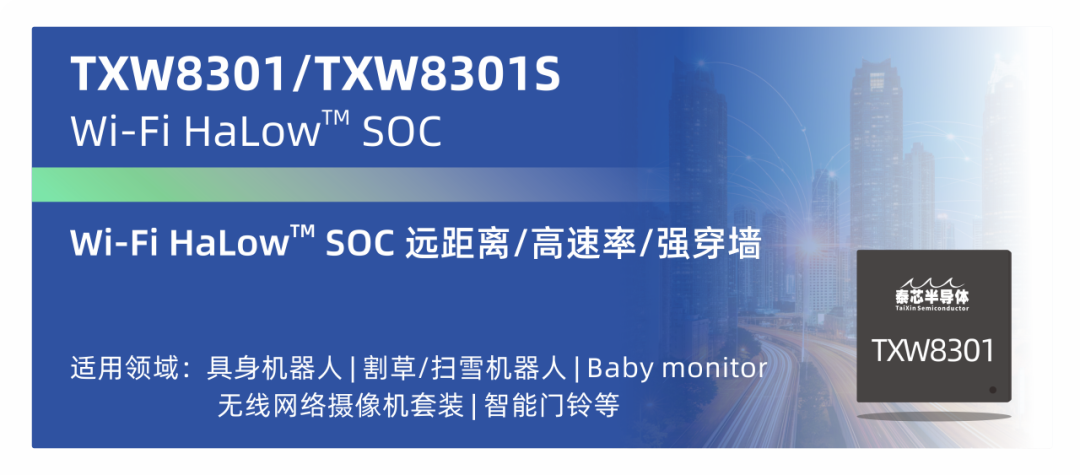
The world's first mass-produced Wi-Fi HaLow™ SoC, supporting 1.5 km outdoor transmission and penetrating 4 floors, unlocking long-distance IoT scenarios;
TXW81X Series
(
AI Large Model Audio/Video Wi-Fi SoC
)
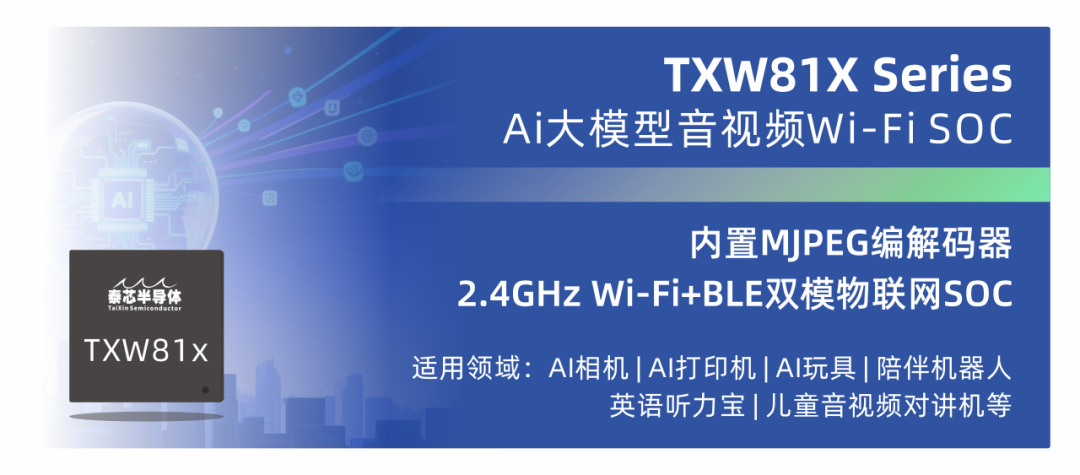
Integrates eight major mainstream AI models, already deployed in scenarios such as AI plush toys;
TXW82X Series
(
ISP + Audio/Video + Multi-mode Communication SoC
)
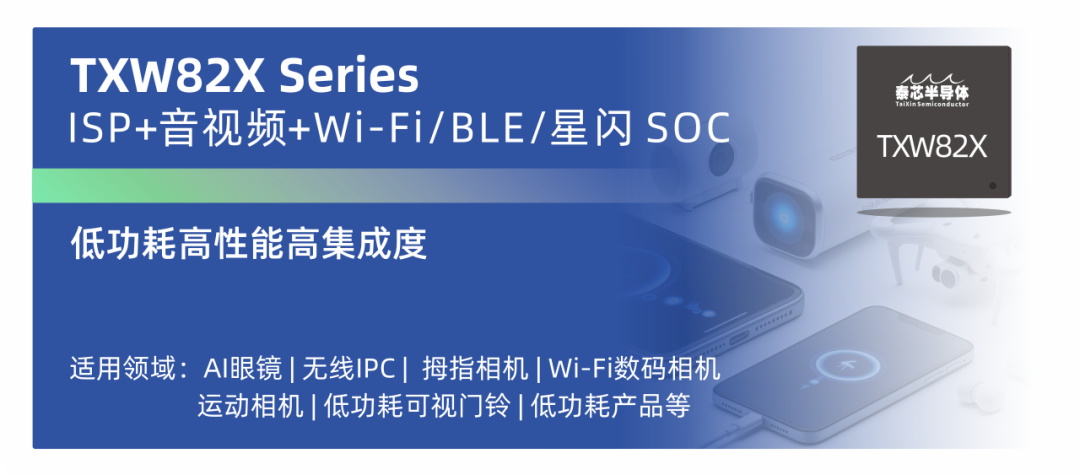
Low power consumption and high integration, suitable for scenarios such as AI glasses, wireless IPC, action cameras, etc.;
TXW901 Series
(
Wi-Fi/BLE Transceiver
)
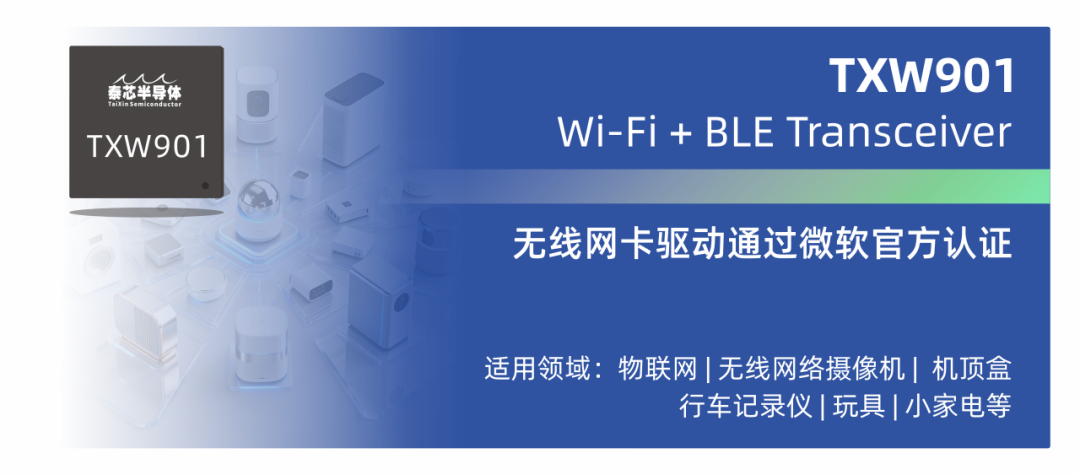
无线网卡驱动获微软官方认证,兼容性拉满。
深耕自研国产芯片赛道,企业先后斩获中国芯多项重磅行业奖项,获评珠海 “独角兽 + 瞪羚” 高成长创新型企业,多项权威荣誉与行业认可,充分印证泰芯自研路线与产品实力。
中国芯片的新机会
从 “替代” 到 “定义”
过去二十年,中国半导体产业常被贴上 “替代” 标签;但在 AI 眼镜这类全新场景中,所有玩家站在同一起跑线,泰芯抓住了 “场景定义芯片” 的核心机会。
各大厂的通用可穿戴平台,并非为 AI 眼镜量身定制;而泰芯 TXW82X 系列,从设计之初就瞄准 “摄像头+AI+无线传输” 核心场景,把 ISP、音视频、无线连接深度融合 —— 这不是简单的功能堆砌,而是为 AI 眼镜量身打造的 “专属芯”。
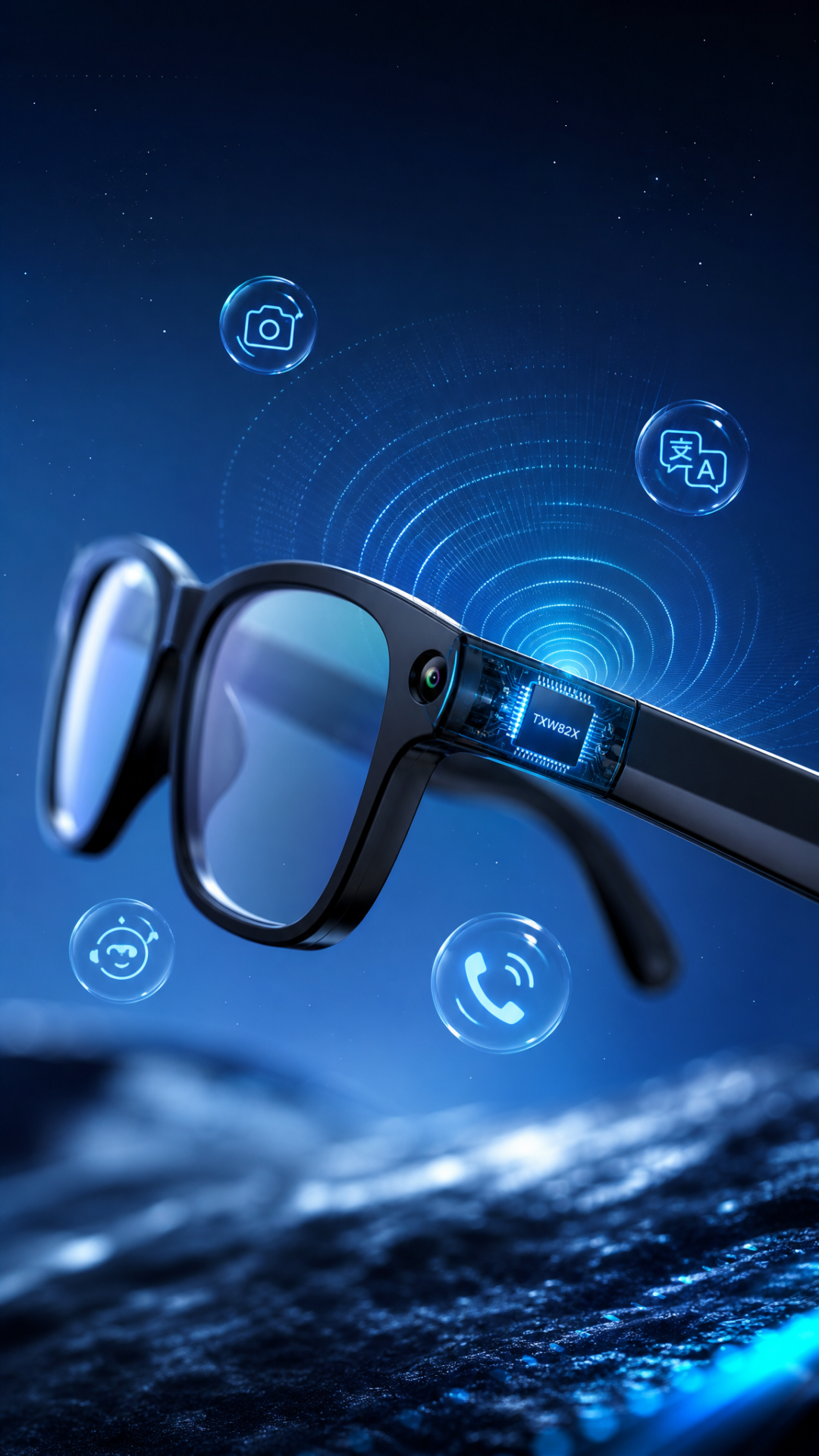
淡海科技 AI 眼镜的落地,正是 “芯片定义产品” 的最佳验证:芯片的能力边界,直接决定终端产品的体验上限。
端侧AI时代
泰芯不只是芯片供应商
TXW82X系列是泰芯在端侧AI浪潮中的尖刀产品,但端侧AI的落地,远不止AI眼镜一个场景。
泰芯正在构建的是覆盖端侧AI全场景的芯片生态:
TXW8301系列(Wi-Fi HaLow™)以1.5公里远距离传输能力,让户外机器人、农业传感器的端侧AI"连得上";
TXW81X系列以无缝对接DeepSeek、豆包、通义千问、百度等八大主流AI大模型的能力,让端侧设备的AI交互"跑得通";
TXW901系列以微软官方认证驱动,让海量物联网设备的端侧AI"接得稳"。
四大系列芯片,覆盖了端侧AI从"感知→连接→处理→交互"的全链路。在端侧AI从百亿美元市场向千亿美元规模跃迁的过程中,泰芯正在成为那些不想被云端算力"卡脖子"的终端厂商,最值得信赖的国产芯片伙伴。
不止于 AI 智能眼镜
更在于中国芯的新角色
2026年AI眼镜大战,产品层面的竞争会愈发激烈。
但在产品之外,有一个更底层的竞争在进行:谁能为AI眼镜提供最好的芯片?
高通、联发科、泰芯——不同类型的芯片公司,在用不同的思路回答这个问题。
泰芯的思路很清晰:做场景芯片。把无线连接和音视频处理深度融合进一颗SoC里,让终端厂商可以用一颗芯片搞定过去需要三颗芯片才能做的事。
淡海科技的AI眼镜,是对这个思路的市场验证。但我们相信,当中国芯片企业找准场景、深耕技术,就一定能在全球竞争中,从 “跟跑者” 变成 “领跑者”。